
Same studio, same week, two classes an hour apart: one has you sweating through your top, the other has you lying over a bolster for twenty minutes.
What are the main types of yoga class?
Most UK timetables run on eight styles: hatha, vinyasa, ashtanga, Iyengar, yin, restorative, hot and kundalini. The labels describe pace and method, not difficulty. A hatha class can be harder work than a flow class if the teacher holds every shape for ten breaths.
- Hatha: one pose at a time, with a pause to set it up.
- Vinyasa (or just "flow"): poses strung together, one movement per breath.
- Ashtanga: a fixed sequence, practised in the same order every time.
- Iyengar: props, precise instruction, long holds.
- Yin: floor poses held three to five minutes, for the connective tissue.
- Restorative: fully propped, nothing held by muscle, up to twenty minutes a pose.
- Hot: a heated room, either a flow class or the fixed Bikram series.
- Kundalini: repeated movement, breathwork and chanting, with less emphasis on postures.
Hatha: where you learn the shapes
On a British timetable, hatha means the slower class. You come into a pose, the teacher talks you through the feet and the ribs and the shoulders, you hold it, then you set up the next one. Names get said out loud.
It's the most forgiving entry point if you've never done a class, and it's where the foundation poses live: Mountain, Triangle, Chair. Plenty of long-term practitioners never leave it.
Vinyasa flow: one breath, one movement
Vinyasa links the poses so the class moves as one sequence, cued by the breath. Sun salutations do the heavy lifting, and you'll pass through Downward Dog more times than you can count. Music is common, and there's rarely a gap to ask questions in.
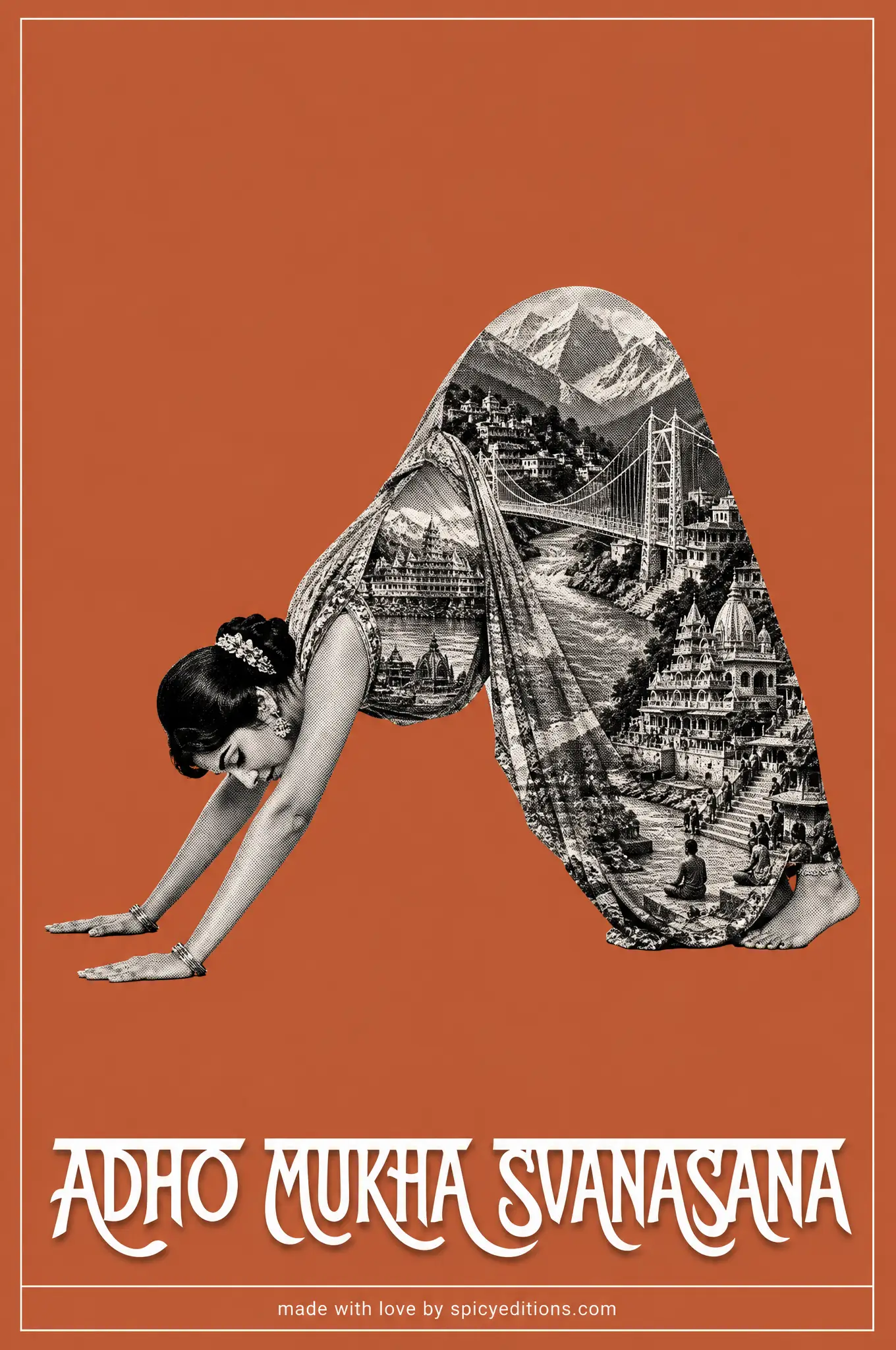
Our Downward Dog print, part of the 52-pose asana series.
Two flavours hide under one heading. Slow flow holds the shapes longer, so you get time to work out what your back leg is doing. Power flow asks far more of your arms.
Ashtanga: the same sequence, every time
Ashtanga runs a set series of poses in a set order, and the Primary Series is the one you'll meet first. Repetition is the point. You stop reading the room and start noticing what your own body did differently this week.
Led classes have a teacher counting the sequence out for everyone. In a Mysore room you practise your own portion at your own pace while the teacher moves between mats, learning the order pose by pose. Nobody expects you to arrive knowing it.
Iyengar: props and precision
Iyengar classes hold poses for a long time and care a great deal about where your joints sit while you're in them. Blocks, belts, bolsters, chairs and wall ropes are standard kit, and teachers train for years before they're certified. Carrying an injury? This is the style that will work around it, and the one that spends fifteen minutes on Triangle and means it.
Yin: three to five minutes a pose
Yin is floor-based, cool and mostly still. You settle into a shape, let the muscles go slack, and stay long enough that the load moves out of the muscle and into the connective tissue around the joints. Three minutes is a short hold.
The sensation is dull and broad rather than sharp, and it does get uncomfortable. Nobody warns first-timers about that. Pigeon and Bound Angle come round on repeat.
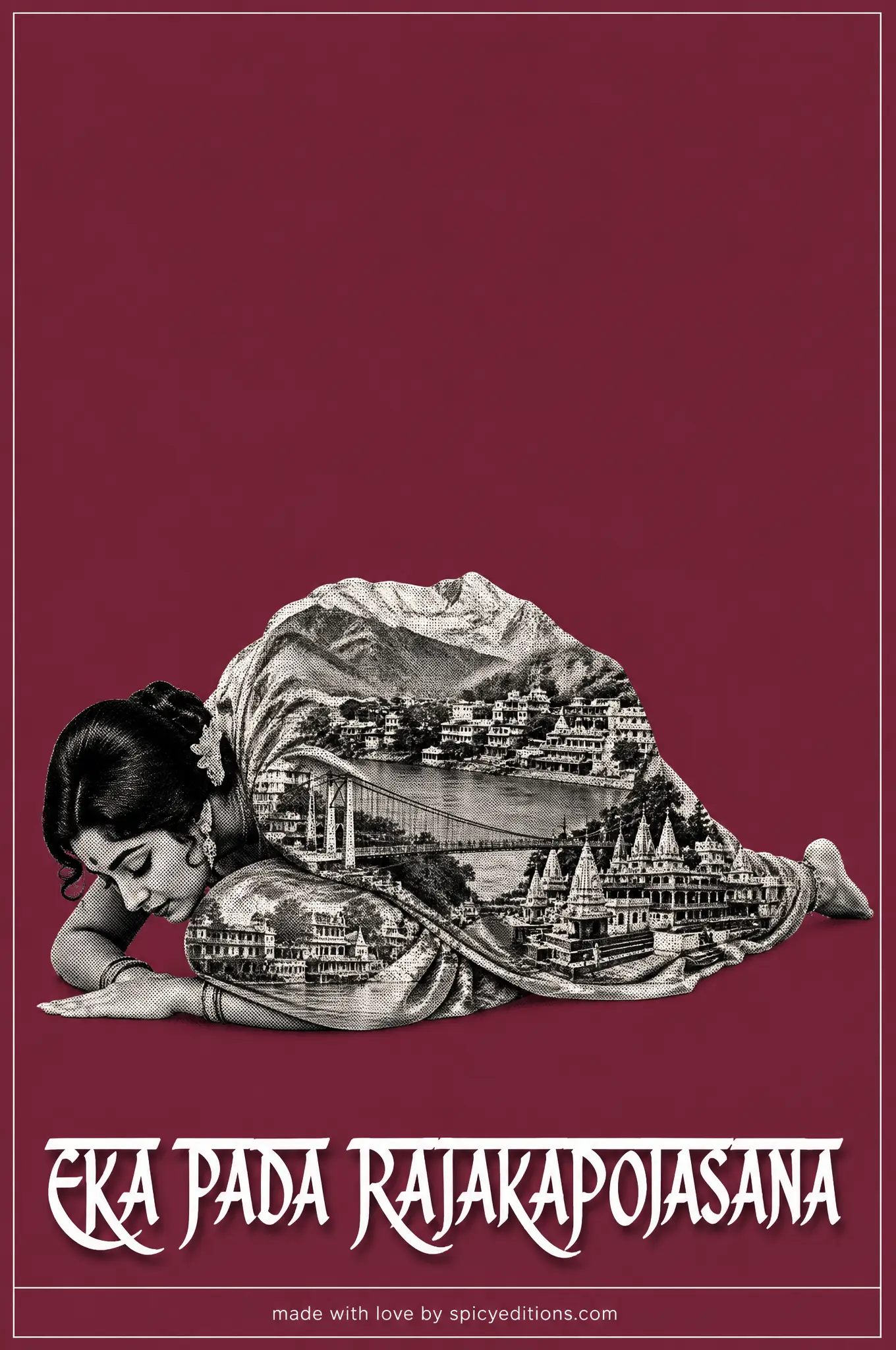
Our Pigeon Pose print, one of the 52 in the series.
Restorative: nothing held at all
People book restorative expecting yin and get a surprise. The props do everything here: no muscle has a job, and one pose can last twenty minutes while the teacher says almost nothing. Expect Reclining Bound Angle over a bolster, Legs-Up-the-Wall and a long Savasana. Bring socks. British halls get cold the moment you stop moving.
Hot yoga and Bikram: what the heat changes
Traditional Bikram is 26 postures and two breathing exercises in a fixed order, over 90 minutes, in a room held around 40°C. Newer hot flow classes run cooler and shorter, and the sequence changes week to week. Heat makes you feel more open than you are, so the risk is going deeper than your joints agreed to.
What the timetable words actually mean
Studios use their own shorthand, and it's rarely explained on the booking page.
- All levels / Open: anyone may book, though it's usually pitched at people who've been a handful of times.
- Beginners' course / Level 1: a fixed block of weeks with the same group, built from the ground up.
- Improvers / Level 2: assumes you know the sun salutation and can hold Downward Dog without watching the clock.
- Mysore: ashtanga self-practice, taught pose by pose, so turning up knowing nothing is fine.
- Drop-in or block: drop-ins suit a shifting rota, blocks suit actually getting better.
Nobody agrees on what "all levels" means, and we've stopped expecting a straight answer. Ringing the studio still works.
Pro Tip: Try the same teacher twice before you judge a style. Studios label the class, but teachers define it, and two hatha slots on one timetable can feel like different practices.
Which one to book first
Never done a class? Start with a beginners' course, or hatha if there's no course running, then add a flow class once the pose names stop sounding like a foreign language (they are one, but you know what we mean). If you sit at a desk all day, yin once a week does more for your hips than a second flow class will.
When your local studio posts its autumn timetable, book the six-week block instead of six separate drop-ins. Same teacher, same room, same faces, and you'll know by week three whether the style suits you.
What's the difference between hatha and vinyasa yoga?
Hatha teaches one pose at a time with a pause between them, so you get instruction and time to set up. Vinyasa links the poses into a sequence timed to the breath, so it moves faster and explains less. For a first class, hatha wins.
Which type of yoga is best for beginners in the UK?
A beginners' course if your studio runs one, hatha if it doesn't. Both give you the pose names and the basic shapes before you're expected to keep up. Leave led ashtanga and power flow until a month or two in.
Is yin yoga the same as restorative yoga?
No. Yin holds floor poses for three to five minutes and deliberately loads the connective tissue, so you feel a strong stretch. Restorative props you up so nothing is loaded at all, and the poses can last longer. Book restorative when you're wiped out, and yin when you want the stretch.