
A home yoga corner doesn't need a spare room. Two metres of clear floor, decent light and a wall you actually look at will do — here's how to put one together in an afternoon.
Start with the floor, not the kit
Find a stretch of floor where you can stand with both arms wide and not hit anything. Near a window is ideal — morning light makes a six o'clock practice far easier to show up for, and daylight does more for the mood of a room than any lamp. Clear the clutter from the edges so the space reads as calm before you've even rolled out the mat. You're not building a studio; you're protecting a small patch of floor from the rest of the house.
One good mat beats three cheap ones
A 4-5mm mat with real grip is the one piece worth spending on. Too thin and your knees complain in Low Lunge; too soft and you'll wobble through balances like Tree. Roll it out in the same spot each day so the body learns that this corner means practice — the cue matters more than you'd think.
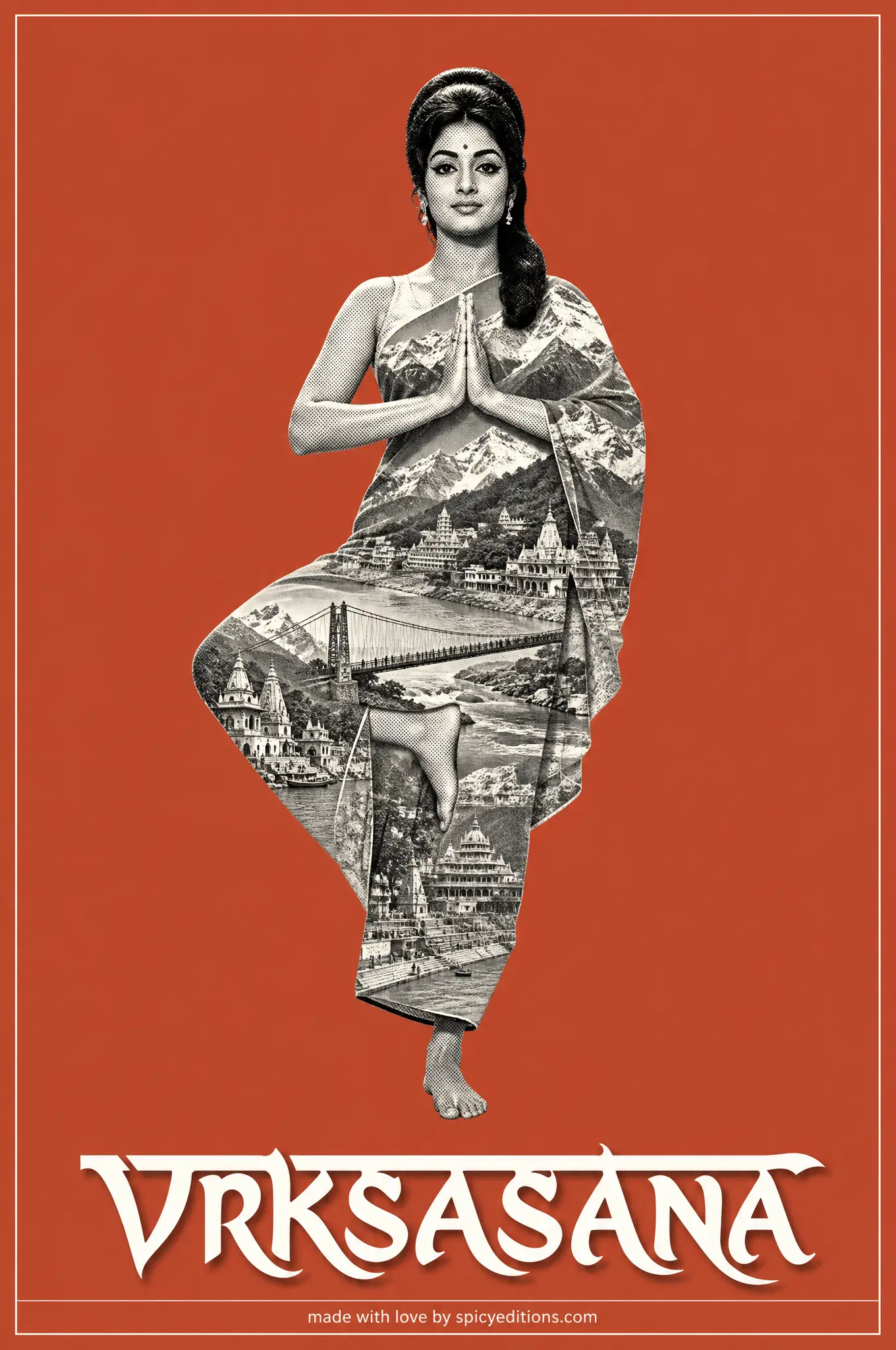
Our Tree Pose print — a fixed point to gaze at turns a wobble into a hold.
Give the corner a wall
A blank wall in front of your mat is a missed trick. A single bold print at eye level gives you somewhere to rest your gaze in standing poses and turns a patch of floor into a room you've chosen on purpose. Pick a pose you're working towards — a Dancer or a Lotus — and let it pull you back to the mat on the days you'd rather stay on the sofa. A drishti, the fixed point you gaze at to steady a balance, is a real technique; a print on the wall gives you one that also happens to look good.
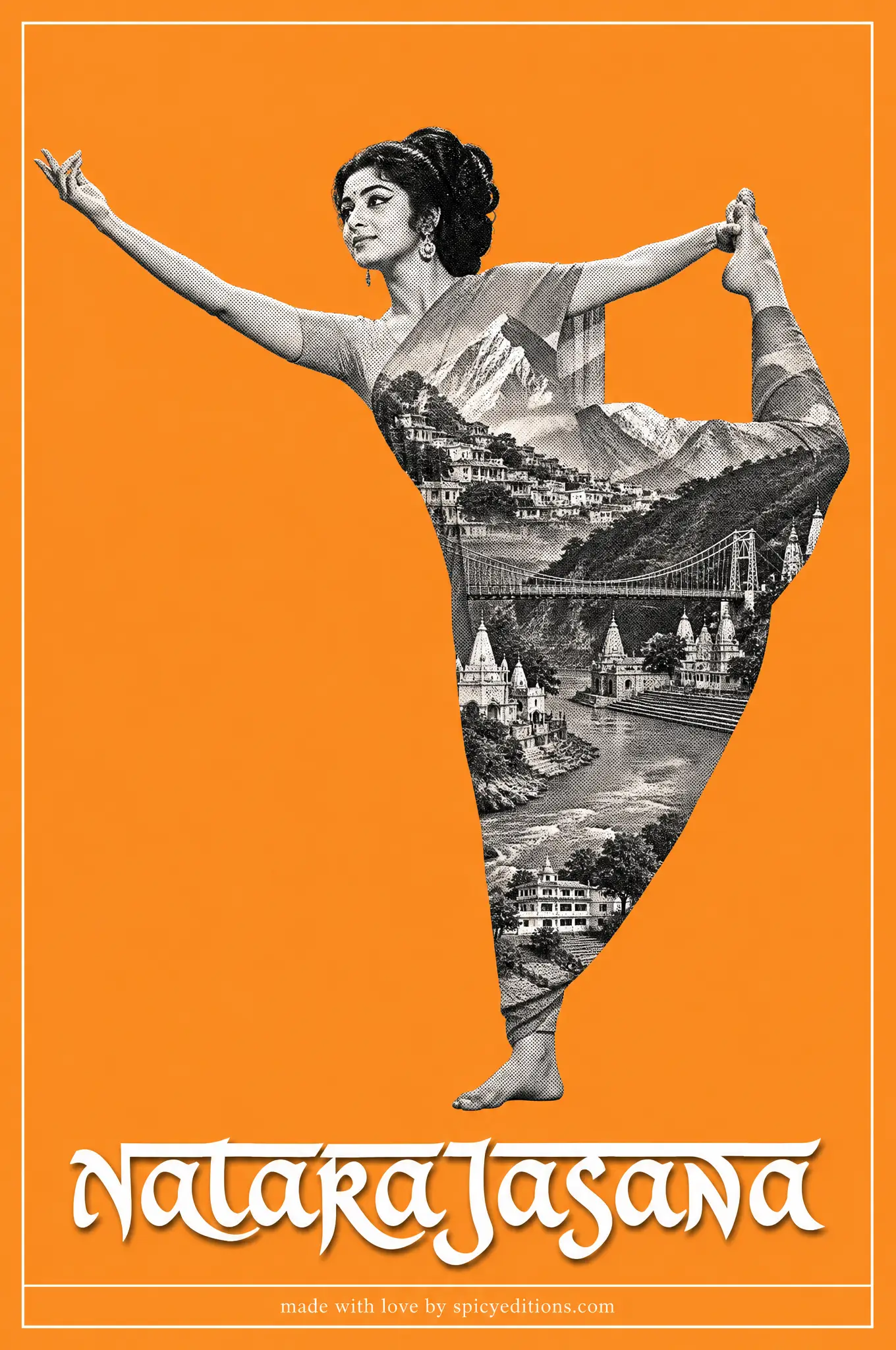
Our Dancer's Pose print — a pose to work towards, hung where you'll see it.
Pro Tip: Hang the print at standing eye level, not sofa-height. You spend most of a home practice on your feet, and a poster hung too low disappears the moment you're in Mountain.
Keep props within arm's reach
Two blocks, a strap and a folded blanket cover almost everything a home practice asks for. A blanket lifts the hips in Easy Seat and saves your knees when you kneel; blocks bring the floor closer when your hamstrings won't; the strap extends your reach in binds without forcing the shoulders. Keep them in a basket by the wall so setting up takes ten seconds, not a hunt through three cupboards.
Set one short sequence you can repeat
A corner gets used when the practice is easy to start. Pick five or six poses, write them on a card and prop it against the wall. Three rounds of Sun Salutation, two standing poses, a twist and a long rest is a complete practice in fifteen minutes. Repetition is the point — the same short sequence done often beats an ambitious one you manage twice.
Make it somewhere you want to be
The corner that gets used is the one that feels good to sit in. Warm light, a plant, art you like on the wall, your mat always ready to go. Browse the full asana series if you'd like the shape you're chasing hanging somewhere you'll see it every day.
How much space do I actually need?
Roughly the length of your mat plus a little room at the sides — about two metres by one. Enough to take Warrior II without clipping the furniture is the real test.
What if I don't have a spare wall?
The back of a door, the side of a wardrobe or a narrow strip between two windows all work. The print just needs to sit roughly at standing eye level where you face during practice.